
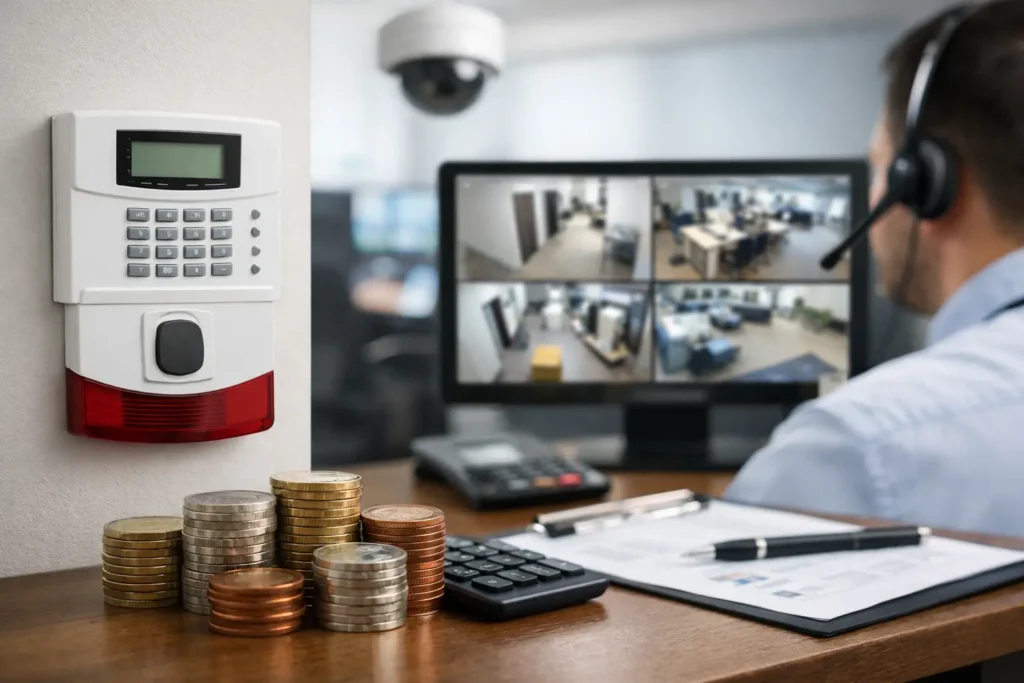
A business alarm can be installed, tested, and ready to signal an event within days. The larger question is what happens at 2:00 a.m. when no one is on site. Alarm system monitoring cost pays for a trained monitoring center to receive signals, verify the event when appropriate, and follow the response instructions your business has established.
For Central Alabama businesses, that recurring expense should be evaluated as part of the complete security plan, not as a standalone line item. A low monthly rate may look attractive until it excludes cellular communication, opening and closing reports, system service, or the level of response your facility actually needs. The right arrangement protects people, property, and business continuity while giving your team a clear point of accountability.
What Is Included in Alarm Monitoring?
Professional monitoring connects your alarm control panel to a central station that operates around the clock. When a protected door opens after hours, a motion detector activates, a panic button is pressed, or an environmental sensor detects a condition, the system sends a signal to the monitoring center.
The center follows the response plan built for your location. That may include contacting designated employees, dispatching emergency responders according to local procedures, or both. The response process should reflect the type of business, the hours of operation, who is authorized to make decisions, and whether the property is occupied.
Monitoring is different from an alarm that only sounds a local siren or sends a notification to one employee’s phone. Those features can be useful, but they rely on someone seeing the alert, assessing it correctly, and taking action. Professional monitoring provides a defined response path when a manager is unavailable, traveling, or handling another emergency.
What Drives Alarm System Monitoring Cost?
Monthly monitoring prices vary because commercial facilities vary. A single retail location with a few protected doors has different requirements than a medical office, warehouse, school, church, apartment community, or multi-site operation. A responsible quote should account for the equipment, communications path, response requirements, and support expectations.
Communication method
The alarm panel needs a dependable way to send signals. Older systems may use a telephone line, while many modern commercial systems use cellular or internet-based communication. Cellular backup can add cost, but it provides protection if a phone line is cut, internet service fails, or a network device goes offline.
The best option depends on the site and the risks being addressed. Businesses that cannot afford a missed signal often choose more than one communication path. That additional redundancy is an operational decision, not simply an equipment upgrade.
Number and type of monitored points
Basic intrusion monitoring may cover doors, motion detectors, glass-break sensors, and alarm panels. Costs can change when the system also monitors fire alarm signals, sprinkler supervision, temperature conditions, water leaks, hold-up devices, or critical equipment rooms.
Each monitored condition has a purpose. For example, a server room temperature alert may help an organization respond before heat damages equipment. A water sensor can limit disruption in a records room or supply area. The objective is not to monitor every possible point. It is to monitor the conditions that could materially affect the business.
Site complexity and operating schedule
Larger buildings, multiple suites, restricted areas, and changing employee schedules can increase the complexity of both installation and ongoing administration. A facility that requires separate user codes, scheduled arming, multiple partitions, or detailed activity reports will need a more tailored configuration than a simple after-hours burglary alarm.
Multi-site businesses should also consider whether each location will be managed separately or through one platform. Centralized administration may require more initial planning, but it can reduce recurring administrative work for operations teams.
Response instructions and notification requirements
A monitoring center can only act on the information it has. Your account may include primary and secondary contacts, call lists for specific events, site access instructions, or different procedures for day and night operations. More detailed response planning can be valuable, especially for facilities with sensitive inventory, employees working late, or limited on-site supervision.
Contact lists need regular attention. If the monitoring center calls a former manager or an employee who no longer has authority, valuable time can be lost. Ask how easily authorized contacts and response instructions can be updated as your team changes.
Service, testing, and contract terms
Monitoring agreements often have a term, along with separate charges for installation, activation, equipment, repairs, or service calls. Some providers bundle certain services, while others price them separately. Neither approach is automatically better. What matters is knowing what is covered and what will result in an additional charge.
Ask whether periodic testing, battery replacement, programming changes, false-alarm troubleshooting, and cellular communicator maintenance are included. A clear service arrangement helps prevent unexpected costs and keeps the system ready for the event it was installed to handle.
Budget Beyond the Monthly Fee
The monthly monitoring charge is only one part of the investment. New systems may include design, equipment, wiring, installation, programming, permitting, and employee training. Existing systems may require an inspection before they can be monitored reliably, particularly if equipment is outdated, has unknown programming, or does not meet current needs.
Do not assume the least expensive installation produces the lowest long-term cost. Poor device placement, weak wiring practices, and incomplete documentation can lead to nuisance alarms, difficult troubleshooting, and future replacement work. A standards-based installation creates a better foundation for service and expansion.
False alarms deserve attention as well. They can interrupt employees, create unnecessary dispatches, and in some jurisdictions lead to penalties. Proper training, well-defined arming procedures, and routine system maintenance can reduce avoidable alarm activity. The goal is not merely to lower costs. It is to ensure real alarm events receive the attention they deserve.
Comparing Monitoring Proposals
When comparing proposals, start by confirming that they cover the same scope. One provider may quote intrusion monitoring only, while another includes cellular communication, remote user management, service coverage, and integration with access control or video surveillance. A lower number is not a meaningful comparison if essential components are missing.
Review these practical questions before making a decision:
- Which signals are monitored, and which conditions are only reported locally?
- What communication path is used, and is backup communication available?
- Who receives notifications, and how are response instructions maintained?
- What installation, activation, service, and cancellation charges apply?
- Can the system integrate with access control, cameras, or other building systems as needs change?
For many businesses, the ability to work with one accountable technology partner has real value. When alarm systems, cameras, access control, structured cabling, and network connectivity are designed with one another in mind, diagnosing an issue is more direct and future changes are easier to plan. Comtex helps commercial customers build that connected approach with installation, monitoring, and ongoing support from a regional team.
Choosing the Right Level of Protection
The right monitoring plan is based on risk, not on a generic package. A small office may need dependable after-hours intrusion monitoring and a straightforward contact list. A distribution facility may need perimeter protection, multiple communication paths, camera integration, and distinct procedures for shipping areas. A property manager may need a scalable approach that supports several buildings and changing tenants.
Start with the questions that affect operations: What event would cause the greatest disruption? Who needs to be notified? How quickly must the business respond? What systems need to remain protected when the building is empty? Those answers shape both the system design and the appropriate alarm system monitoring cost.
A well-planned monitoring agreement should feel predictable: clear responsibilities, tested communication, current contacts, and responsive support when your facility changes. That is the kind of protection that lets your team focus on running the business while the system remains ready in the background.