
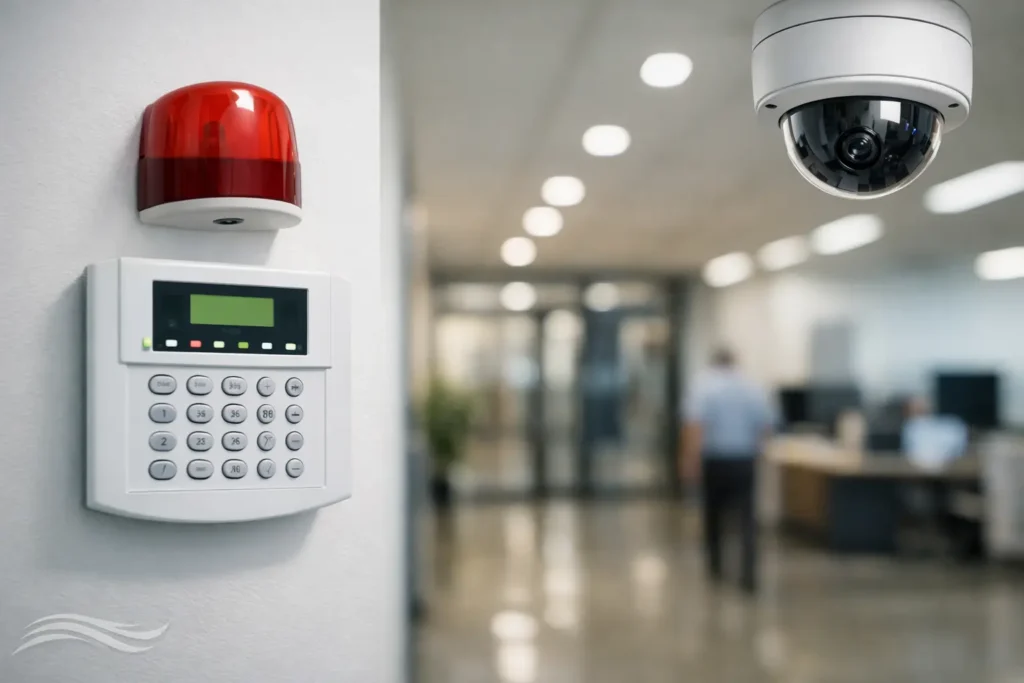
A back door left unsecured, a forced entry after closing, or an employee facing a threatening situation can quickly become more than a security concern. It can interrupt operations, place people at risk, and create costly uncertainty. Commercial alarm systems give businesses a dependable way to detect unauthorized activity, notify the right people, and support a faster response when a facility is unattended or vulnerable.
For Central Alabama businesses, the right alarm system is not simply a control panel and a few door contacts. It is part of a broader plan for protecting employees, customers, equipment, inventory, and business continuity. The best design reflects how a facility actually operates – who comes and goes, which areas need protection, what happens after hours, and how the system connects with monitoring, access control, and video surveillance.
Start With the Risks at Your Facility
Every business has different exposure points. A retail location may be focused on employee safety, cash-handling areas, and merchandise exits. A warehouse may need stronger perimeter protection and coverage for loading doors. Medical, financial, and professional offices often need to protect sensitive records, equipment, and restricted spaces. Multi-tenant properties must also account for shared entrances, common areas, and individual suite access.
A walkthrough should identify more than exterior doors and ground-level windows. Consider rooftop access, loading docks, utility rooms, server closets, detached buildings, and areas that may be unoccupied for long periods. It is also useful to review where employees work alone, where visitors are received, and where a discreet duress alarm could help call for assistance.
The goal is not to put a device in every corner. It is to create meaningful detection at the points where an intrusion, safety event, or operational concern is most likely to occur. Overbuilding a system can add unnecessary cost and false-alarm risk. Underbuilding it can leave gaps that are only discovered after an incident.
What Commercial Alarm Systems Should Include
Most business alarm systems begin with a centrally managed control panel, door contacts, motion detection, and an audible alarm. The right system may also include glass-break detection, hold-up or panic buttons, environmental sensors, and cellular communication for alarm reporting.
Door and window contacts are often the first layer of protection because they identify an opening at a protected entry point. Motion detectors add another layer inside areas such as offices, storage rooms, and hallways. They can be especially valuable where doors may be propped open, windows are difficult to monitor, or an intruder could enter through an overlooked location.
Panic and duress devices serve a different purpose. These devices allow employees to request help during a threatening event without needing to reach a phone or publicly activate a loud alarm. Their placement should be carefully planned around reception desks, cash-handling stations, administrative offices, and other locations where staff may interact with the public.
Communication is just as important as detection. A system should have a reliable path for reporting alarm events, particularly if a phone or internet connection is interrupted. Cellular backup can provide an additional communication path, while battery backup helps the system remain operational during a power outage. The appropriate configuration depends on the facility, the communication services available, and the level of risk the business is managing.
Monitoring Turns Detection Into a Response Plan
An alarm that sounds locally may discourage an intruder, but it does not automatically ensure that someone will respond. Professional monitoring provides a defined process for receiving alarm signals, attempting to verify the event when applicable, and contacting designated personnel or emergency responders based on the established procedures.
Monitoring plans should be built around the business, not treated as an afterthought. Owners and facility managers should decide who receives calls, who has authority to cancel an alarm, and how after-hours events should be handled. Those contacts must be updated when staff roles change. An outdated call list can delay decisions at the moment they matter most.
False alarms also deserve attention. They can affect employee confidence, consume local public safety resources, and create avoidable costs under local alarm ordinances. Proper installation, clear user training, and routine testing go a long way toward reducing them. Employees should understand how to arm and disarm the system, what to do if they make an error, and whom to contact if a device appears to be malfunctioning.
Integrate Security Systems Where It Helps
Alarm systems become more useful when they work alongside other building systems. A door-forced-open event from an access control system, for example, can provide valuable context for an alarm event. Video surveillance can help designated users review activity at an entrance, parking area, or interior space. Intercom systems can give staff a controlled way to communicate with visitors before granting entry.
Integration should serve a clear operational purpose. A small office may only need a well-designed intrusion alarm and reliable monitoring. A larger facility, campus, or multi-site organization may benefit from coordinated access control, cameras, and alarm reporting that provide a more complete picture of an incident.
There are trade-offs. More connected systems can improve visibility and reduce the number of separate vendors involved, but they also require careful design, dependable network infrastructure, and ongoing support. The right approach is one that improves response and accountability without creating unnecessary complexity for employees.
Separate Fire Alarm Requirements From Intrusion Protection
Businesses sometimes use the term “alarm system” to describe both security and fire protection. They serve different functions and may be subject to very different requirements. A commercial fire alarm system is designed to support life safety and must be planned according to applicable codes, occupancy requirements, and the authority having jurisdiction.
An intrusion alarm protects against unauthorized entry and selected security events. It should not be treated as a substitute for a code-compliant fire alarm system, emergency lighting, sprinkler system, or other required life-safety measures. When a project involves both security and fire protection, coordination is essential so each system is installed, tested, and maintained for its intended purpose.
Design for Daily Use, Not Just After-Hours Protection
The most effective system is one employees can use consistently. If arming and disarming procedures are confusing, codes are shared too broadly, or sensors interfere with normal operations, staff may work around the system rather than rely on it.
Establish individual user credentials where the system supports them instead of relying on one shared code. Review who has access when employees leave or responsibilities change. Define a closing procedure that confirms doors are secure, protected areas are clear, and the system is armed. For businesses with different shifts, assign responsibility clearly so the last person out is not guessing what to do.
Routine service matters as well. A door contact that is knocked out of alignment, a low battery, or a damaged motion detector can create trouble at the worst time. Scheduled inspections, testing, and prompt service requests help keep small issues from becoming security gaps. A local provider that understands the full environment can also coordinate alarm work with access control, cameras, cabling, and communications infrastructure when needed.
Questions to Ask Before Choosing a Provider
A commercial security project should begin with practical questions. Does the provider assess the facility before recommending equipment? Can the system be designed around business hours, employee workflows, and future growth? Is monitoring available, and who will provide ongoing service after installation?
It is also wise to ask about installation standards, communication backup options, user training, testing, and how service calls are handled. Businesses with multiple locations should ask whether their systems can be managed consistently across sites while still accommodating each facility’s specific needs.
Comtex helps commercial customers across Central Alabama bring security, connectivity, and communications systems together through one experienced partner. That approach can simplify planning and service, especially when an alarm system needs to operate alongside cameras, access control, networks, or structured wiring.
A well-planned alarm system should give your team confidence without adding friction to the workday. When detection, monitoring, employee procedures, and ongoing support are aligned, your facility is better prepared for the moments no business wants to face.