
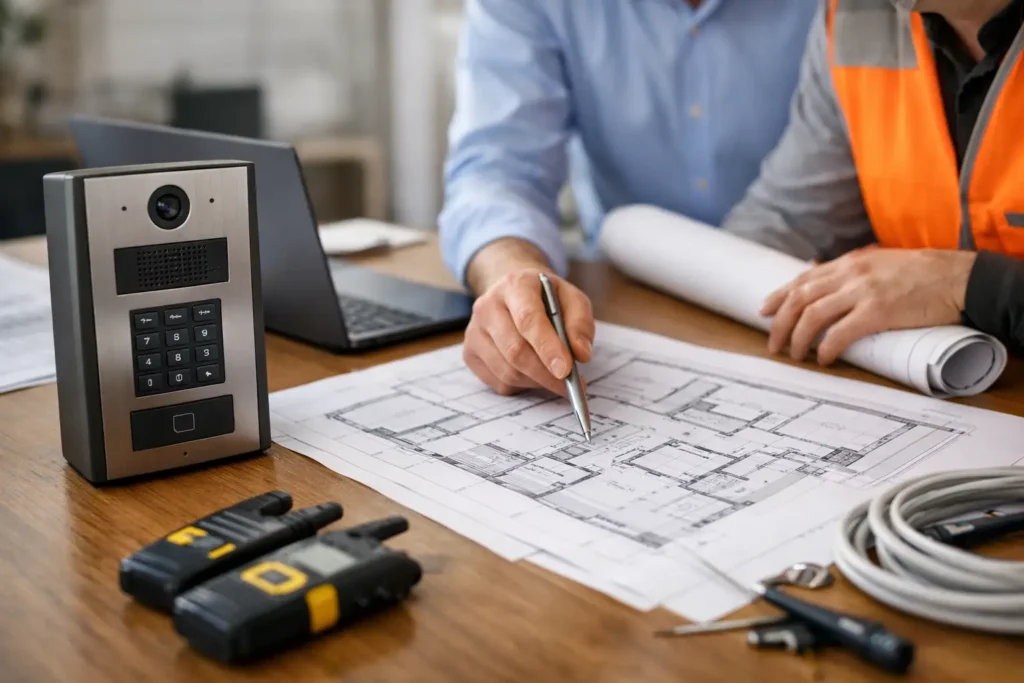
A front door is one of the busiest decision points in a commercial building. Employees need to enter without delay. Visitors, vendors, delivery drivers, and contractors need a clear way to request access. Staff need to know who is calling before a door is released. A properly planned commercial intercom system installation turns that daily traffic into a controlled, accountable process rather than an interruption.
For Central Alabama businesses, the right system is rarely just a speaker at the entrance. It is part of a larger communications and security plan that may include access control, video surveillance, structured cabling, telephone systems, and network infrastructure. The goal is straightforward: make it easier for the right people to communicate and enter while giving your team better control over the facility.
Start With How Your Building Actually Operates
An intercom system should be designed around the people, doors, and workflows that matter most. A medical office has different needs than a warehouse. A multi-tenant office building must manage visitors differently than a school, manufacturing facility, or professional services firm.
Before selecting equipment, consider what happens at each entrance throughout the day. Is the door used mainly by employees, visitors, deliveries, or after-hours service providers? Does the person answering calls sit at a reception desk, move throughout the building, or work remotely at times? Are there multiple entrances that need the same level of control?
These questions determine whether a basic audio intercom is sufficient or whether the facility needs video verification, mobile answering capability, directory functions, access credentials, or integration with an existing security system. Buying more features than the operation will use creates unnecessary cost. Buying too little can leave staff relying on workarounds that weaken security and slow down service.
Define the outcome before choosing the device
A useful project begins with a clear operational outcome. For example, a business may want reception staff to verify every visitor before unlocking the main entrance. A distribution facility may need drivers to call a shipping office from a secured gate. A property manager may want tenants to communicate with visitors at a common entrance without giving each tenant separate control of the building.
When the desired outcome is clear, equipment choices become easier. The system can be matched to the work instead of forcing the work to fit the system.
Choose Audio, Video, or a Connected Intercom System
Audio intercoms remain a practical choice for controlled interior doors, employee-only areas, and locations where staff already have a clear view of the entrance. They can provide dependable communication with a simple user experience.
Video intercoms add visual confirmation. This is particularly useful at exterior entrances, gates, lobbies, and loading areas where staff need to identify a visitor, vehicle, package delivery, or contractor before granting access. Video can reduce uncertainty when a call comes in during a busy workday or after normal business hours.
Connected intercom systems can extend calls to desk phones, dedicated stations, mobile devices, or other approved endpoints. That flexibility can be valuable when the person responsible for approving access is not always at one desk. It also requires careful planning around network capacity, user permissions, device management, and cybersecurity.
The right choice depends on the level of risk, the type of traffic at the entrance, and the response your team can realistically provide. A video station does not improve security if no one is available to answer it. Likewise, an audio-only unit may be inadequate at a public-facing entrance where visual verification is necessary.
Plan the Commercial Intercom System Installation With Access Control
The strongest intercom installations connect communication with the action that follows it. When an authorized employee answers an intercom call, that person may need to release a door, open a gate, or direct the visitor to another entrance. Integrating the intercom with access control allows those actions to happen within a controlled system.
This approach also supports clearer access rules. Employees may use cards, fobs, mobile credentials, or keypads to enter designated areas. Visitors can request entry through the intercom. Contractors may be granted access only during scheduled hours. Each group follows a process that fits its role.
For many facilities, a connected system provides better accountability than mechanical keys alone. Credentials can be changed when staffing changes, access can be limited by door or schedule, and entry activity can be reviewed when needed. The specific reporting available depends on the equipment and configuration, but the operational advantage is consistent: access decisions are easier to manage.
Video surveillance adds useful context
An intercom and camera system can work together at a busy entrance. The intercom allows two-way communication, while video gives staff a clearer view of who is present and what is happening around the door or gate. This can be especially helpful for businesses with deliveries, public-facing lobbies, or large campuses.
Integration should be planned carefully. The goal is not to put every system on one screen simply because it is possible. The goal is to give the right employees useful information without making their daily process complicated.
Do Not Treat Cabling and Network Design as Afterthoughts
Intercom performance depends on the infrastructure behind it. A clean commercial intercom system installation includes appropriate cable pathways, terminations, power planning, equipment placement, labeling, and testing. These details affect reliability long after the initial installation is complete.
For network-based intercoms, the existing data network should be evaluated before devices are added. Network switches may need available ports or power capability. Wireless coverage may need attention if mobile devices will answer calls in certain areas. Segmentation and security settings should be considered so physical security devices are properly managed within the broader network environment.
Outdoor locations create additional requirements. Gate stations, exterior door units, and parking-area equipment need suitable weather protection, mounting, and cable routing. In Central Alabama, heat, humidity, rain, and storms can expose weak installation practices quickly. Equipment should be selected and installed for its environment, not just for its feature list.
A standards-based installation also helps future service. Clearly labeled cabling, accessible equipment, accurate documentation, and organized connections save time when a device needs adjustment, a door is added, or a facility expands.
Design for the People Who Will Use It Every Day
A well-designed system should make daily decisions easier. Reception staff should be able to answer a call without navigating unnecessary screens. Facility managers should understand who can release a door and how permissions are administered. Employees should know where to direct visitors and what to do when an intercom call comes through after hours.
Training does not need to be lengthy, but it should be specific. Staff should understand normal visitor procedures, delivery procedures, emergency considerations, and the process for reporting a problem. A system is more dependable when employees do not have to guess whether a door has been released or who is responsible for responding.
It is also wise to consider the exceptions. What happens if the reception desk is unattended? Who answers a gate call during lunch? What is the backup process during a network outage or power interruption? Not every building needs the same redundancy, but every facility benefits from thinking through its most likely disruptions.
Work With One Partner Across Connected Systems
Intercom projects often involve more than an intercom contractor. They can touch cabling, network equipment, telephone systems, access control hardware, cameras, electrical coordination, and building operations. Managing separate vendors can create delays and leave questions about who owns the final result.
A single experienced technology partner can coordinate the design, installation, testing, and ongoing support across these connected systems. That is especially valuable when a business is renovating a lobby, opening a new location, upgrading security, or replacing aging communications equipment at the same time.
Comtex has supported commercial customers across Central Alabama since 1985 with connected and protected solutions designed for real operating environments. The focus should remain on a system that fits the facility, follows sound installation practices, and has a clear path for service when needs change.
Prepare for Growth Without Overbuilding
A business does not need to install every possible feature on day one. It does need a plan that avoids costly rework when another door, tenant suite, warehouse area, or location is added later. That may mean selecting equipment that can support additional stations, leaving capacity in pathways, or documenting the network and access control design for future expansion.
The best time to make those decisions is before walls are closed, concrete is poured, or a new office opens. A site assessment can identify door conditions, cable routes, power needs, network availability, and integration opportunities early enough to keep the project on schedule.
A commercial intercom system should give your team a practical way to manage the front door, the side gate, and every controlled entry in between. When communication, access, and installation quality are addressed together, your facility is easier to operate and better prepared for the next person who arrives.