
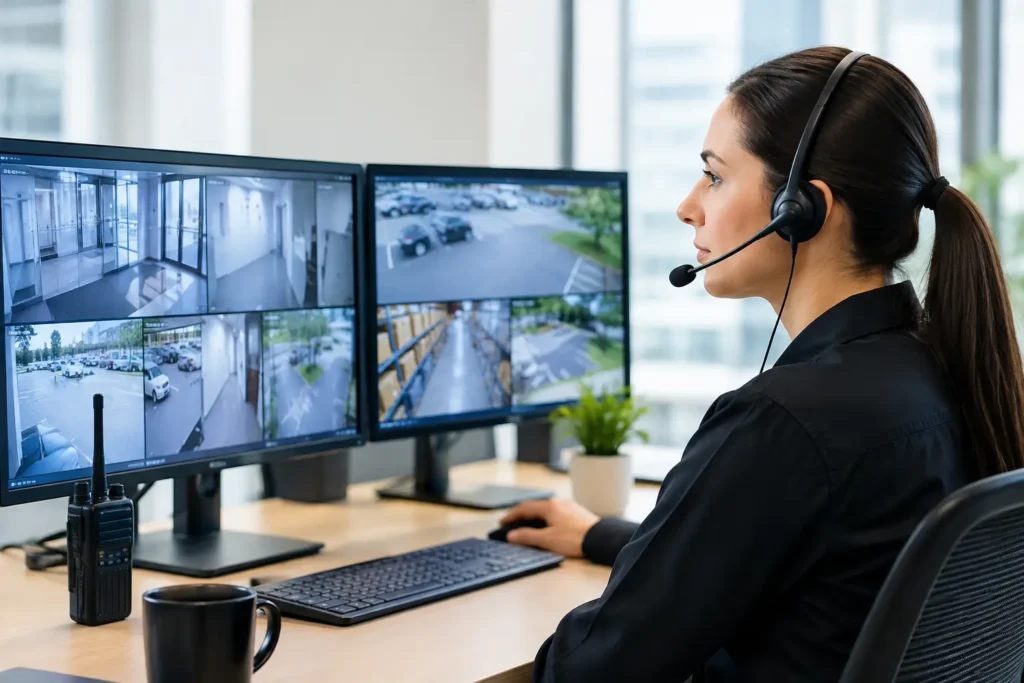
A break-in alarm at 2:15 a.m. is only useful if someone receives the signal, follows a defined procedure, and can call for help when no employee is on site. That is the practical answer to what does alarm monitoring include: more than an alarm panel and a monthly charge. It is a managed response process designed to keep your facility connected to trained professionals when an alarm event occurs.
For commercial properties, monitoring is one part of a broader security plan. The quality of the system design, the devices installed, the accuracy of contact information, and the response procedures all affect how well that plan works. Business owners and facility managers should understand what is included, what varies by provider, and where monitoring connects with access control, video surveillance, and life-safety systems.
What Does Alarm Monitoring Include?
At its core, alarm monitoring includes the transmission of signals from your security or fire alarm system to a monitoring center. The center receives those signals around the clock and acts based on the event type and the response instructions established for your business.
A monitored system may send signals for intrusion events, such as a door opening after hours or motion detected in a protected area. It may also report fire, panic, duress, tamper, power loss, low battery, communication failure, or environmental conditions when compatible equipment is installed. The exact signals available depend on the alarm panel, connected devices, programming, and service agreement.
When a signal is received, monitoring personnel follow the account’s response plan. Depending on the alarm type and your instructions, that can include notifying designated contacts, requesting emergency dispatch, or both. The goal is to avoid leaving a critical event dependent on someone noticing a phone alert after hours.
Signal transmission from the premises
Your alarm system needs a dependable communication path to send events off site. Traditional phone lines were once common, but commercial systems now often use cellular communicators, internet-based communication, or a combination of paths. Dual-path communication can provide added continuity if one connection is interrupted.
This connection matters because an alarm panel cannot be monitored if it cannot report. A professionally designed system can supervise the communication path and report a trouble condition when it loses contact with the monitoring center. That gives your team an opportunity to address a problem before an emergency occurs.
Trained response and notification procedures
A monitoring center does not make business decisions on the fly. It works from instructions approved by your organization. Those instructions typically identify authorized contacts, phone numbers, passwords or verification procedures, the order of notification, and circumstances that call for emergency dispatch.
For an intrusion alarm, personnel may attempt to contact authorized representatives before or while requesting law enforcement response, depending on local procedures and account settings. For a fire alarm, the response process is typically more immediate and governed by applicable fire and safety requirements. Your provider should explain the procedures clearly so there are no surprises when an event occurs.
Emergency dispatch when required
One of the central benefits of professional monitoring is the ability to request emergency response when an alarm meets the defined dispatch criteria. This may involve police, fire department, emergency medical services, or another authority having jurisdiction.
Monitoring does not guarantee a particular emergency response time. Public safety agencies determine their own priorities, policies, and availability. It does ensure that an alarm signal reaches a staffed operation that can initiate the appropriate call process, even when your office is closed, your manager is traveling, or your staff cannot answer immediately.
System supervision and trouble reporting
Monitoring can also provide visibility into system conditions that are not active emergencies. A supervised commercial alarm system may report a loss of AC power, a low backup battery, a device tamper, an open zone, or a communications failure.
These alerts are valuable because security systems often fail gradually rather than all at once. A failing battery or disconnected communicator can reduce protection without being obvious to employees. Trouble reporting helps your team and service provider address issues before they become a gap in coverage.
What Monitoring Does Not Automatically Include
Monitoring is often discussed as if it covers every aspect of security. It does not. It is a response and communications service, not a substitute for proper installation, routine testing, employee procedures, or physical building security.
For example, monitoring personnel generally do not watch every camera feed continuously unless your agreement specifically includes video monitoring services. Standard alarm monitoring may receive an alarm event without receiving a live image or video clip. Video verification, remote guarding, and managed video services can add useful context, but they are separate capabilities that should be defined in writing.
Likewise, alarm monitoring does not repair damaged devices, replace batteries, update user codes, or test every detector automatically. Those needs are handled through maintenance, inspection, service visits, and internal operating procedures. A service plan may include some of these items, but they should not be assumed to be part of basic monitoring.
False alarms are another important distinction. Monitoring centers respond according to the information and instructions available. A system that is poorly installed, improperly armed, or used inconsistently can create unnecessary dispatches. Many jurisdictions assess false alarm fees, so employee training and clear arming procedures are part of responsible system management.
Building the Right Monitoring Plan for Your Facility
The right plan depends on the risks at your location and how the building operates. A single-office business with limited after-hours traffic has different needs than a medical facility, warehouse, school, financial office, or multi-site organization.
Start by identifying what needs protection. Perimeter doors, receiving areas, server rooms, inventory storage, cash-handling areas, and employee entrances may each require different devices and response rules. Consider whether the system needs to distinguish between an employee entering early, a forced door, and a panic event. Better programming can improve response while reducing unnecessary alarms.
Your contact list deserves the same attention as the devices. Monitoring is only as effective as the current instructions on the account. Review who can receive calls, who has authority to cancel a dispatch, and who can provide access to the facility. Update this information promptly when managers, keyholders, or vendors change.
For businesses with multiple systems, integration can improve situational awareness. An access control event can identify which credential opened a door. Video surveillance can help document activity around an alarm. Intercom systems can support communication at controlled entry points. These tools serve different purposes, but coordinated design can give operations teams a clearer picture of what happened and where.
Questions to Ask Before Choosing a Monitoring Provider
Before signing an agreement, ask how signals are transmitted and whether the system will report a loss of communication. Ask what alarm types are monitored, whether there are different procedures for intrusion and fire, and how emergency dispatch decisions are made.
You should also ask who will install and service the equipment, how after-hours service requests are handled, and whether the provider can support related systems such as cameras, access control, structured cabling, and network connectivity. Managing these systems through separate vendors can create delays when a problem crosses technology boundaries.
For Central Alabama businesses, local experience also matters. A provider that understands commercial facilities, regional service needs, and standards-based installation can help align system design with the way your organization actually operates. Comtex helps businesses bring security, communications, and connectivity under one accountable technology partner, with ongoing support after installation.
Keep Monitoring Effective Over Time
Alarm monitoring should be reviewed as your business changes. A new warehouse addition, a remodeled office, a change in operating hours, or a new access control system can affect zones, contacts, and response instructions. Schedule periodic testing and make sure employees know how to arm, disarm, and report issues without creating avoidable alarms.
The most effective monitored alarm system is not simply the one that sends the most alerts. It is the one designed around your facility, maintained properly, and connected to a response plan your team can rely on when the building is unattended.