
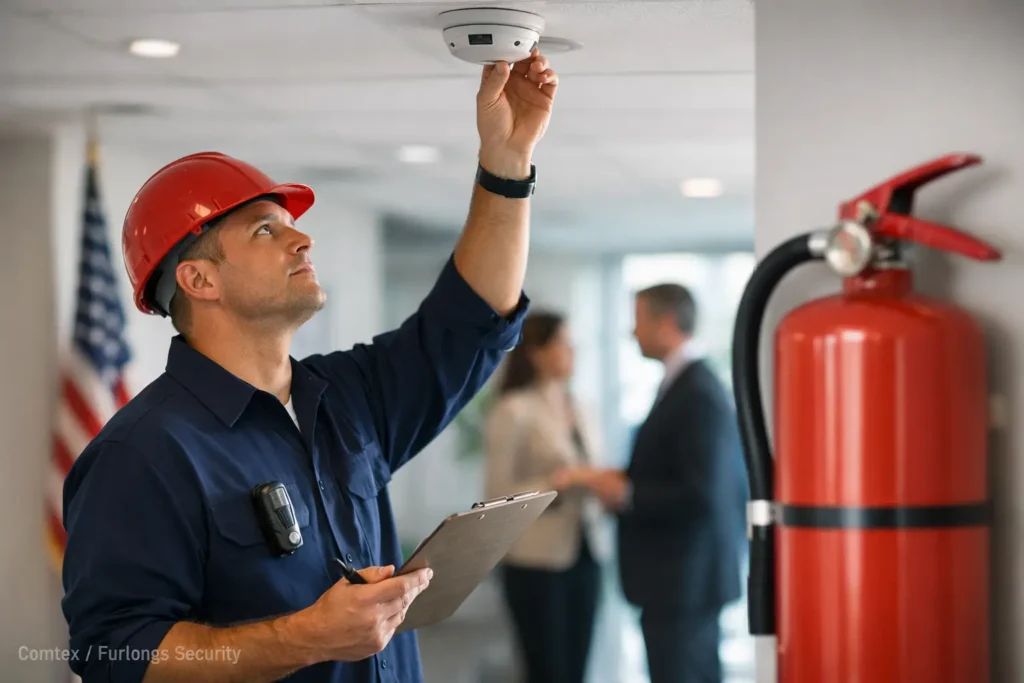
A missed fire alarm inspection can become a serious business interruption long before a fire ever occurs. A trouble signal that goes unresolved, a disabled device left undocumented, or an expired extinguisher can create risks for people, property, insurance coverage, and daily operations. Understanding the right fire inspection frequency helps facility leaders keep life-safety systems ready without treating compliance as a last-minute task.
For commercial properties in Central Alabama, the correct schedule is not always a single number. It depends on the equipment installed, the building’s use, the applicable fire code, the authority having jurisdiction, and the requirements of the monitoring or insurance provider. A dependable plan accounts for all of those factors and creates a clear record that the system has been maintained.
What Determines Fire Inspection Frequency?
Fire protection systems work as a group, but they do not all require the same inspection interval. A fire alarm control panel, smoke detector, sprinkler system, kitchen suppression system, emergency light, and portable fire extinguisher each have separate maintenance expectations. Building owners and managers need to understand which equipment is on-site before setting a service calendar.
The authority having jurisdiction, often called the AHJ, has a major role. This may be a local fire marshal, building official, or another code enforcement authority. Local requirements can be based on adopted editions of national fire and life-safety standards, but enforcement practices and documentation requirements may vary by jurisdiction. Insurance carriers and lease agreements can also establish additional expectations.
Building occupancy matters as well. A small professional office generally faces different risks than a healthcare facility, school, warehouse, restaurant, apartment community, manufacturing operation, or property with high public traffic. Dust, humidity, cooking operations, construction activity, occupancy changes, and equipment exposure can all affect how often systems should be visually checked or professionally serviced.
The practical rule is simple: use the required schedule as the minimum, then adjust operational checks when the environment creates greater risk.
Fire Alarm Inspection Frequency: Monthly, Semiannual, and Annual Tasks
Commercial fire alarm systems typically need attention throughout the year, not only during an annual appointment. Facility staff may perform routine visual checks of the fire alarm control panel, verifying that it shows normal status and that no trouble, supervisory, or alarm conditions have been ignored. A panel in trouble may still appear to be working, but it can indicate a communication failure, low battery, wiring issue, device problem, or other condition that requires service.
Professional inspection and testing are commonly scheduled at intervals defined by the system type and applicable standards. Annual testing is a common requirement for many initiating devices and notification appliances. Some components, including certain batteries, communication paths, and monitoring functions, may require more frequent testing or verification. Other tests occur on longer cycles.
That is why an annual visit should not be treated as a complete replacement for ongoing oversight. If employees hear an intermittent panel chirp, see a disabled point, notice damaged pull stations, or find that remodeling has blocked devices, those conditions should be addressed promptly. Waiting until the next scheduled inspection can leave a facility exposed and may create avoidable disruptions during a fire marshal visit.
A qualified provider should test the equipment applicable to the site, document the results, identify deficiencies, and help the business understand what needs correction. For monitored systems, confirming that alarm and supervisory signals reach the monitoring center is equally important. A functioning local alarm does not provide the same protection if off-site communication has failed.
Changes to the Building Can Trigger Earlier Service
A change in occupancy, floor plan, ceiling height, tenant use, or building layout may call for an inspection before the normal due date. The same is true after water damage, lightning events, electrical work, major cleaning, construction, or a false alarm caused by a known equipment issue.
Construction dust is especially hard on smoke detection equipment. During renovation, devices may need to be protected, temporarily managed according to approved procedures, then returned to service and tested when work is complete. Never leave a fire alarm zone or device disabled without a documented plan and appropriate notification to the people responsible for the building’s safety.
Other Fire Protection Equipment Has Its Own Schedule
Fire inspection frequency extends beyond the alarm system. A complete facility program should identify each life-safety asset and its service requirements.
Portable fire extinguishers generally require routine visual checks by the property owner or designated staff, along with periodic professional maintenance. Staff checks should confirm that extinguishers are visible, accessible, properly mounted, charged, sealed, and free from obvious physical damage. An extinguisher hidden behind storage or blocked by furniture cannot help during the first moments of a fire.
Automatic sprinkler systems also need regular inspection, testing, and maintenance. Depending on the component, this may include checking valves, gauges, fire department connections, alarm devices, backflow assemblies, pipes, and sprinkler heads. Some activities occur more often than others, while internal pipe inspections and certain component tests follow longer intervals. Only a qualified fire protection professional can determine the correct scope for the system installed at a particular property.
Emergency lighting and exit signs should be checked routinely and tested according to the applicable requirements. These devices are often overlooked because they remain quiet until a power failure or emergency occurs. Burned-out lamps, failed batteries, blocked exit paths, and missing signage can create serious problems during an evacuation.
Commercial kitchens need special attention. Hood and duct suppression systems, cooking equipment, and grease-laden exhaust systems follow schedules that may be more frequent than those of a standard office environment. The volume and type of cooking activity affect service needs. Restaurant operators should confirm their requirements with their service provider and local fire authority rather than assume one schedule applies to every kitchen.
Create a Fire Inspection Calendar That Works in Practice
A good fire protection calendar is specific enough to guide daily operations and simple enough that employees will use it. Start with an asset inventory: fire alarm panels, communicators, detectors, pull stations, notification devices, extinguishers, sprinklers, emergency lighting, exit signs, kitchen suppression equipment, and any related monitoring service.
For each asset, record its location, inspection interval, responsible party, most recent service date, next due date, and any open deficiencies. Keep inspection reports and repair records in a central location that can be accessed by management, maintenance staff, and the person responsible for meeting with the fire marshal or insurer.
Avoid relying on one employee’s memory or a paper tag alone. Staff turnover, multi-site responsibilities, and busy seasons can cause due dates to slip. Calendar reminders and a clear service process make it easier to schedule work before deadlines become urgent.
For organizations with multiple locations, consistency matters. Standardize how sites report trouble conditions, who approves repairs, where documentation is stored, and how recurring service is scheduled. A single approach reduces gaps between locations and gives leadership a better view of compliance risk across the business.
Inspection Is Not the Same as Repair
An inspection identifies whether equipment is operating as intended at the time it is evaluated. It may also reveal deficiencies, but it does not automatically correct them. If a panel battery is weak, a detector fails testing, a sprinkler valve is closed, or an extinguisher is damaged, the issue should move quickly from inspection report to repair plan.
Some deficiencies are straightforward. Others may involve replacement parts, system programming, wiring repairs, permit coordination, or an updated design due to a building change. The key is to assign ownership and a completion date. Leaving deficiencies open creates uncertainty for employees and can complicate insurance reviews, tenant relationships, and future inspections.
It is also wise to distinguish between a nuisance alarm and a false alarm. Repeated unwanted alarms should be investigated, not simply tolerated. They can indicate poor device placement, environmental contamination, an aging component, or a system issue that deserves professional attention. Frequent alarms can also lead occupants to respond more slowly when a real emergency occurs.
Work With a Provider That Sees the Whole Facility
Fire protection equipment does not operate in isolation. Alarm communications may depend on network infrastructure or cellular service. Access control, video surveillance, intercoms, and building communications can all affect how a business responds to an emergency. Coordinating these systems through a knowledgeable provider can simplify service requests and reduce the burden of managing separate vendors.
Comtex helps Central Alabama businesses manage connected security and communications infrastructure with standards-based installation and ongoing support. For facilities that need fire alarm service alongside access control, surveillance, structured wiring, or communications systems, one accountable partner can make maintenance planning more manageable.
The right schedule is the one that meets applicable requirements, reflects the risks in your facility, and gives your team confidence that problems will be found before an emergency tests the system.