
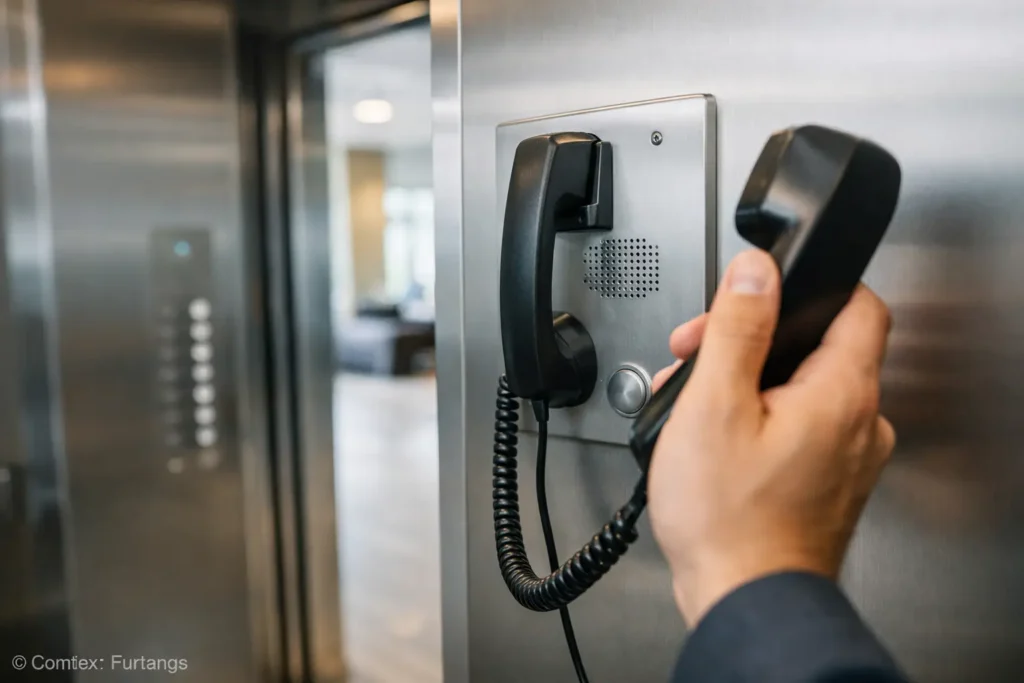
A trapped passenger cannot wait for a receptionist to return from lunch or for a building manager to notice an alarm. Elevator phone requirements exist to give people inside the cab a direct, dependable way to reach help when normal movement and communication are no longer possible. For commercial property owners, that makes elevator emergency communication a life-safety responsibility, not simply another telephone extension.
The right system must work when an elevator is stalled, when a passenger is alone, and when the building is operating outside normal business hours. It also has to align with the elevator code adopted by the local authority having jurisdiction, the elevator manufacturer’s specifications, and the requirements of the company that maintains the elevator.
What Elevator Phone Requirements Typically Cover
Most commercial elevators require a two-way emergency communication system located inside the elevator cab. In older installations, this was commonly a dedicated analog telephone line connected to an emergency phone. Today, approved cellular, IP-based, and managed communication solutions may also be used when they provide the required reliability and are accepted by the local authority.
The system is designed for one purpose: a passenger presses the emergency button and reaches a party that can respond appropriately. That party may be a staffed central station, a security desk, an elevator monitoring provider, or another approved location capable of receiving the call and coordinating assistance.
While exact rules vary by jurisdiction and by the code edition in force, elevator emergency communication systems generally need to provide these core functions:
- Hands-free, two-way voice communication from inside the cab
- A clearly identified emergency call button that is accessible to passengers
- Automatic dialing or connection to an approved monitoring or response location
- Reliable identification of the elevator and its building location when the call is received
- A communication path that remains available when the elevator is out of service or a passenger cannot provide details
The key distinction is that an elevator emergency phone is not an ordinary office phone. It cannot depend on a receptionist answering a transferred call, a voicemail box, or an unmonitored extension. The response point must be able to recognize the call, communicate with the passenger, and initiate the proper response.
The Code Is Local, but Reliability Is Universal
Commercial elevator systems are generally governed by state and local adoption of safety codes, including editions of ASME A17.1/CSA B44, along with building and accessibility requirements. The code edition used for a property may depend on the building’s location, permit history, renovation scope, and the date the elevator was installed or modernized.
That is why a facility manager should avoid treating an online code summary as a final answer. A requirement that applies to a newly installed elevator may not apply in the same way to an existing cab, while a significant modernization can trigger additional upgrades. Your elevator contractor, communications provider, and local elevator inspector should be working from the same project assumptions.
For properties in Central Alabama, the practical starting point is to confirm the requirements with the applicable authority and the licensed elevator service provider before changing phone service, replacing the controller, or beginning a cab renovation. This step prevents a common problem: a new communications circuit is installed, but the elevator phone hardware, monitoring arrangement, or documentation does not meet inspection expectations.
Why Traditional Phone Lines Are Becoming a Challenge
For years, elevator phones relied on plain old telephone service, often called POTS. These analog lines were simple, familiar, and supported by building infrastructure that many elevator systems were designed around. As carriers retire or reprice legacy copper services, however, property owners are facing higher costs, limited availability, and pressure to move to another option.
A cellular elevator communicator can be a practical replacement, particularly where no dependable analog line is available. It can also reduce dependency on aging in-building wiring. But cellular is not automatically the right answer. Signal strength inside the machine room or controller location must be verified, equipment must be listed and installed correctly, and the service arrangement must support continuous emergency calling.
VoIP can also support elevator communication in some applications, but it deserves careful review. Voice quality, power backup, network availability, dial-plan behavior, and emergency call routing all matter. A standard office VoIP extension that works during business hours is not necessarily appropriate for a life-safety application. If a network switch loses power, an internet circuit fails, or a call route changes after a phone system update, the elevator phone cannot become unreachable.
The decision comes down to the building environment. A well-designed managed analog replacement, cellular gateway, or dedicated communications solution may be appropriate, provided it meets the project’s code, equipment, and monitoring requirements. The goal is not to preserve an old phone line at any cost. The goal is to preserve dependable emergency communication.
Power, Supervision, and Location Information Matter
An elevator emergency call is only useful if the person receiving it knows where to send help. Every system should provide clear site, building, elevator, and cab identification to the response center. In a multi-building campus, a generic incoming number is not enough. The monitoring contact should be able to distinguish the south parking deck elevator from the main office elevator without relying on a distressed passenger to explain it.
Power planning is equally important. Depending on the equipment and installation, the elevator communications path may need backup power or other measures to continue functioning during a power interruption. The elevator itself may be on emergency power, battery lowering, or a generator-supported system, but the communication equipment must be considered separately. The phone, cellular communicator, network hardware, and monitoring path each have their own potential failure points.
This is where integrated planning pays off. An elevator contractor may handle the cab equipment and controller connection, while a technology provider handles the voice circuit, cellular signal assessment, structured cabling, backup power coordination, and monitoring connectivity. When those responsibilities are not clearly defined, gaps are easy to miss.
Testing Should Be Part of Building Operations
Installing a compliant system is only the first step. Emergency communication needs periodic testing to confirm that the call reaches the correct party, that audio is clear in both directions, and that location information remains accurate. Testing is especially valuable after a phone carrier migration, network change, elevator modernization, building renovation, or monitoring-provider change.
A useful test does more than confirm dial tone. Place an actual call from each elevator cab and verify the full response process. Does the monitoring operator answer promptly? Can they identify the exact elevator? Can they speak clearly with someone inside the cab? Do the listed property contacts and escalation procedures still reflect current staff?
Document the test date, the elevator tested, the response location, the outcome, and any corrective work. For facility teams managing several properties, a simple recurring schedule can prevent overlooked equipment. It also creates a record that supports maintenance planning and helps identify recurring line, signal, or hardware issues before an emergency occurs.
Common Mistakes That Create Risk
The most frequent failure is treating the elevator phone as part of the general office phone system. An office relocation, carrier conversion, or PBX upgrade may disconnect an elevator line without anyone realizing it. Any telecom project should include an inventory of elevator phones, fire alarm communicators, security panels, and other critical devices before service changes are made.
Another issue is sending emergency calls to a location that is not consistently staffed. A front desk may be appropriate only when coverage is truly continuous and the team has a defined procedure for responding to elevator entrapments. Otherwise, a dedicated monitoring solution is often the safer operational choice.
Poor documentation also causes problems. Labels inside the cab, programming records, monitored account details, and service contacts should all be maintained as the building changes. If a property is sold, renamed, or reorganized, the elevator emergency information must change with it.
Finally, do not assume that a cellular device will work because employees have mobile service in the building. Equipment may be located in a concrete machine room, below grade, or near electrical interference. A site assessment and an actual test of the installed solution are more dependable than assumptions.
Planning Elevator Emergency Communications With One Accountable Team
Elevator phone requirements sit at the intersection of elevator maintenance, life-safety procedures, telephone service, and building infrastructure. The strongest results come from coordinating those areas early, especially when replacing legacy phone lines or modernizing an older property.
Comtex helps commercial customers bring communications infrastructure and ongoing support under one accountable provider, working alongside elevator professionals and facility teams to address the connectivity behind critical building systems. A properly planned solution can reduce aging-line exposure, clarify who receives emergency calls, and make routine testing easier to manage.
Before making any phone-service change, identify every elevator, verify the existing call path, confirm the approved response point, and review the applicable inspection requirements. A clear plan today gives a trapped passenger one less uncertainty when they need help most.