
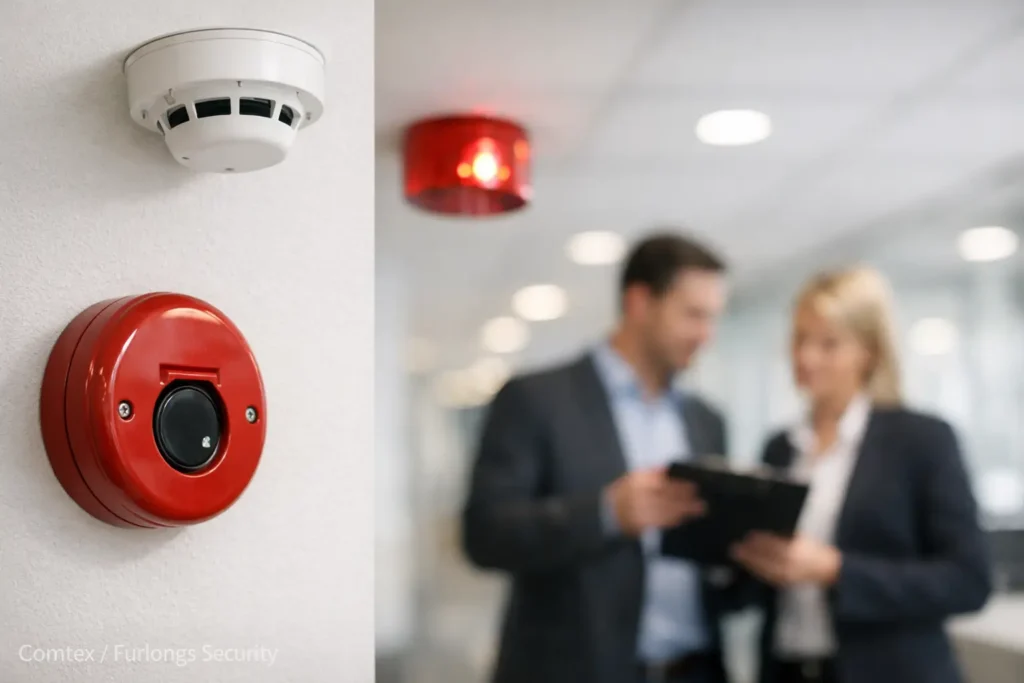
A fire alarm panel can appear normal every day of the year and still create a serious compliance problem when a device is impaired, a test record is missing, or a renovation changes how a space must be protected. This commercial fire alarm compliance guide helps Central Alabama business and facility leaders understand the practical work behind maintaining a code-ready system.
Fire alarm compliance is not a single inspection or a certificate kept in a file drawer. It is an ongoing responsibility involving system design, equipment condition, testing, documentation, monitoring, and coordination with the authority having jurisdiction, often called the AHJ. For a business, the goal is straightforward: help occupants receive timely warning, support an orderly response, and avoid preventable disruptions during inspections, renovations, or emergencies. Comtex now owns Furlongs FIRE and Security and can help with all of your FIRE alarm needs. www.FurlongsSecurity.com
Start With the Codes That Apply to Your Building
Commercial fire alarm requirements are shaped by more than one standard. The adopted local fire code, building code, state requirements, occupancy type, insurer expectations, and the AHJ all influence what is required. Many jurisdictions rely on NFPA 72 for fire alarm installation, inspection, testing, and maintenance practices, but the edition adopted locally and the way it is enforced can vary.
That distinction matters. A medical office, warehouse, school, restaurant, apartment property, church, and office building may have different notification, detection, monitoring, and recordkeeping obligations. A building’s age also matters. Existing buildings are not always required to meet every condition applied to new construction, but changes in occupancy, use, square footage, layout, or renovation scope can trigger upgrades.
Before approving work or assuming an existing system is sufficient, confirm the applicable requirements with the AHJ and qualified fire alarm professionals. This is especially important when purchasing a property, taking over a leased space, expanding into an adjoining suite, or converting storage areas into occupied workspaces.
Know Who Is Responsible
The property owner typically carries the primary responsibility for maintaining life-safety systems, although lease agreements may assign day-to-day duties to tenants or property managers. Those contractual arrangements do not replace code obligations. Facility leaders should make sure responsibilities are clear for scheduling service, responding to trouble signals, maintaining access to equipment, and retaining records.
A reliable process also identifies who may place the system in test mode, who communicates with the monitoring center, and who has authority to approve impairments. When these decisions are unclear, a minor service issue can become a false dispatch, an unreported outage, or a gap in protection.
Maintain the System You Actually Have
A compliant fire alarm system is not limited to the control panel mounted in an electrical or communications room. It includes initiating devices, notification appliances, power supplies, batteries, communication pathways, supervising equipment, and any connected systems such as sprinkler monitoring, door releases, smoke control interfaces, elevator recall, or fire suppression controls.
Facility teams should maintain an accurate inventory of these components and understand which areas they protect. This is particularly valuable in multi-tenant buildings and facilities that have been remodeled over time. Device labels fade, ceiling tiles move, walls are added, and equipment rooms become storage areas. Small changes can affect access, audibility, visibility, detection coverage, and serviceability.
A qualified technician can identify common concerns before an inspection exposes them: obstructed pull stations, painted smoke detectors, damaged horn-strobes, missing device labels, inaccessible panels, depleted standby batteries, or communication failures. Some issues are simple to correct. Others may require a design review because the building has changed beyond the capabilities of the original system.
Do Not Treat Trouble Signals as Routine
A supervisory or trouble condition is not the same as an active fire alarm, but it is still a warning that part of the system needs attention. Common causes include low batteries, ground faults, disabled devices, communication failures, open circuits, and issues with sprinkler-related supervisory equipment.
Repeatedly silencing a trouble condition without correcting its cause can leave the business exposed and complicate compliance records. Establish a service process that documents the signal, assigns responsibility, tracks the repair, and confirms the system returned to normal operation. If a portion of the system must be disabled for repair, follow the impairment procedures required by the AHJ and your facility policies.
Schedule Inspection, Testing, and Maintenance
Testing is where a fire alarm system proves that its components can perform as intended. Frequency and scope depend on the equipment, the adopted code, manufacturer guidance, and local requirements. Some visual checks may be performed more often, while functional testing of devices, batteries, notification appliances, communications, and interfaces follows prescribed intervals.
The key is not merely checking a box. A functional test should verify that an initiating device sends the correct signal, the panel responds properly, notification appliances operate in the right areas, the monitoring pathway communicates, and connected life-safety functions perform as designed. Testing must also be coordinated so employees, tenants, security personnel, monitoring providers, and the fire department are not surprised by an expected signal.
For most commercial facilities, it is wise to build the annual inspection and test cycle into the operating calendar rather than waiting for an authority inspection or a lease renewal deadline. Schedule service at a time that minimizes disruption, but do not allow convenience to push required work indefinitely. Businesses with multiple locations benefit from a consistent calendar, central record storage, and a designated person who reviews completed reports.
Keep Documentation Ready for Review
Documentation is one of the most overlooked parts of commercial fire alarm compliance. An inspector may be able to see that a horn-strobe works, but the facility should also be able to show what was tested, when it was tested, who performed the work, what deficiencies were found, and how those deficiencies were resolved.
Maintain current records for system inspections, testing, maintenance, repairs, monitoring information, permits, acceptance tests, impairment events, and major modifications. Keep updated drawings, device lists, panel programming information, and operating instructions available to authorized personnel. The exact records required vary, but organized documentation makes inspections faster and gives management a clearer view of system condition.
A practical recordkeeping process should capture four items:
- The date, location, and scope of each inspection, test, service call, or repair.
- The technician or company completing the work and the results observed.
- Each deficiency, its risk level, and the corrective action or planned completion date.
- Any system impairment, notification made, and confirmation that protection was restored.
Digital records are often easier to search and share across property, operations, and security teams. Paper records can still be effective if they are complete, protected, and consistently maintained. The method matters less than the ability to produce accurate information when it is needed.
Plan Carefully for Renovations and System Changes
Renovations create some of the most common compliance gaps. Moving a wall, closing off a room, adding a tenant improvement, installing high shelving, changing a ceiling, or altering an occupancy can affect device placement and system performance. A project that seems limited to finishes or furniture may still alter the fire alarm plan.
Bring fire alarm review into the project early, alongside electrical, cabling, access control, and network planning. This avoids discovering late in construction that devices must be relocated, circuits extended, notification coverage improved, or permits obtained. It also reduces the chance of conflicting work above ceilings and in equipment rooms.
Replacement decisions require judgment. A repair may be appropriate for a newer system with readily available parts and a stable service history. An upgrade may make more sense when parts are obsolete, trouble conditions recur, the panel cannot support necessary expansion, or communication technology no longer meets requirements. The lowest immediate repair cost is not always the lowest operational cost over the next several years.
Coordinate Fire Alarm Work With Other Building Systems
Fire alarm systems often interact with physical security, communications, networking, emergency notifications, and building controls. Those connections should be understood and tested after changes. For example, access-controlled doors may need to release during an alarm condition, while security staff may need clear procedures for responding to events without interfering with life-safety operation.
This is where single-provider coordination can reduce risk. When one experienced team understands the building’s low-voltage infrastructure, it is easier to plan cabling routes, avoid duplicate site visits, coordinate shutdowns, and identify whether a change in one system affects another. The fire alarm system remains a specialized life-safety installation, but its operation should not be isolated from the rest of the facility.
A Practical Commercial Fire Alarm Compliance Review
A periodic internal review helps leadership catch issues between formal inspections. Confirm that the panel shows normal status, equipment rooms remain accessible, pull stations and detectors are unobstructed, service records are current, and open deficiencies have owners and deadlines. Review whether recent renovations, occupancy changes, or equipment additions require a professional assessment.
Also consider the people side of compliance. Employees should know basic alarm response procedures, where to report a trouble signal, and who to contact after hours. A well-maintained system is more effective when the organization has a clear response plan and avoids actions that could delay evacuation or silence a needed alarm.
For Central Alabama organizations, Comtex can help coordinate dependable, standards-focused fire alarm service alongside the connectivity and security systems that support daily operations. The right next step is not waiting for a failed inspection. It is establishing a documented service plan that keeps your facility protected, prepared, and easier to manage.